Incident 64: Le robot du service client effraie les clients
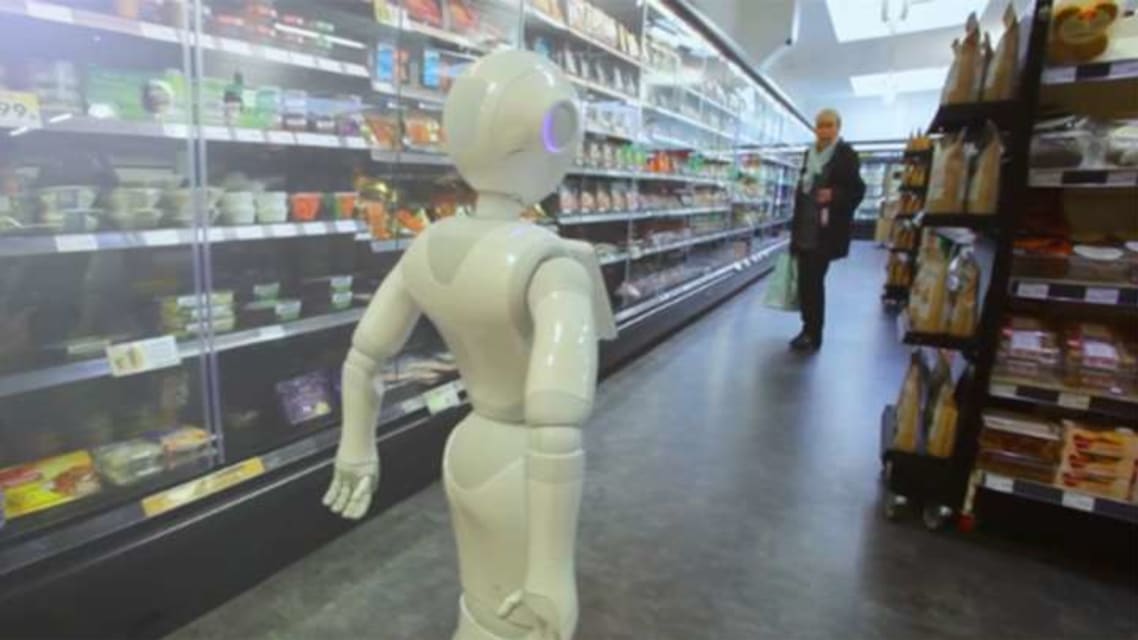
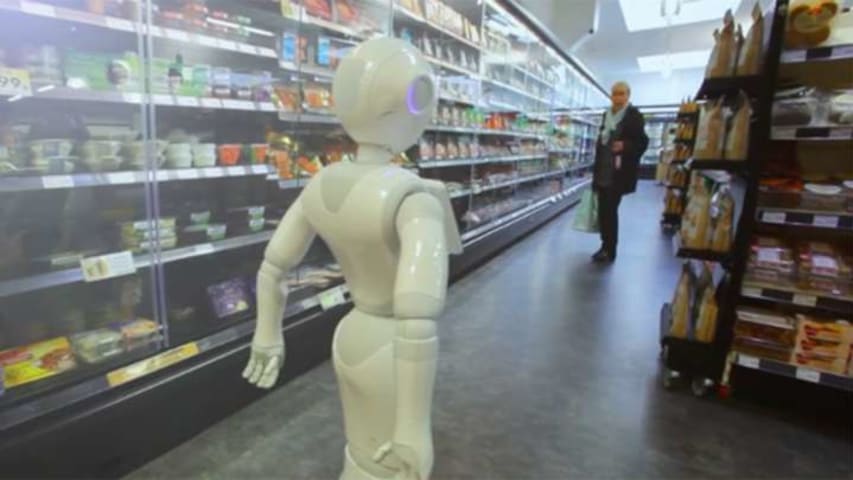
Description: L'université Heriot-Watt en Écosse a développé un robot d'épicerie artificiellement intelligent, Fabio, qui a fourni des réponses inutiles aux questions des clients et a « effrayé » plusieurs clients, selon l'épicerie Margiotta.
Entités
Voir toutes les entitésAlleged: Heriot-Watt University developed an AI system deployed by Heriot-Watt University et Margiotta, which harmed Store Patrons.
Classifications de taxonomie CSETv0
Détails de la taxonomieProblem Nature
Indicates which, if any, of the following types of AI failure describe the incident: "Specification," i.e. the system's behavior did not align with the true intentions of its designer, operator, etc; "Robustness," i.e. the system operated unsafely because of features or changes in its environment, or in the inputs the system received; "Assurance," i.e. the system could not be adequately monitored or controlled during operation.
Specification, Assurance
Physical System
Where relevant, indicates whether the AI system(s) was embedded into or tightly associated with specific types of hardware.
Vehicle/mobile robot, Software only
Level of Autonomy
The degree to which the AI system(s) functions independently from human intervention. "High" means there is no human involved in the system action execution; "Medium" means the system generates a decision and a human oversees the resulting action; "low" means the system generates decision-support output and a human makes a decision and executes an action.
Medium
Nature of End User
"Expert" if users with special training or technical expertise were the ones meant to benefit from the AI system(s)’ operation; "Amateur" if the AI systems were primarily meant to benefit the general public or untrained users.
Expert
Public Sector Deployment
"Yes" if the AI system(s) involved in the accident were being used by the public sector or for the administration of public goods (for example, public transportation). "No" if the system(s) were being used in the private sector or for commercial purposes (for example, a ride-sharing company), on the other.
No
Data Inputs
A brief description of the data that the AI system(s) used or were trained on.
Customer requests
Classifications de taxonomie CSETv1
Détails de la taxonomieIncident Number
The number of the incident in the AI Incident Database.
64
Special Interest Intangible Harm
An assessment of whether a special interest intangible harm occurred. This assessment does not consider the context of the intangible harm, if an AI was involved, or if there is characterizable class or subgroup of harmed entities. It is also not assessing if an intangible harm occurred. It is only asking if a special interest intangible harm occurred.
no
Date of Incident Year
The year in which the incident occurred. If there are multiple harms or occurrences of the incident, list the earliest. If a precise date is unavailable, but the available sources provide a basis for estimating the year, estimate. Otherwise, leave blank.
Enter in the format of YYYY
2018
Estimated Date
“Yes” if the data was estimated. “No” otherwise.
Yes
Multiple AI Interaction
“Yes” if two or more independently operating AI systems were involved. “No” otherwise.
no
Embedded
“Yes” if the AI is embedded in a physical system. “No” if it is not. “Maybe” if it is unclear.
yes
Risk Subdomain
A further 23 subdomains create an accessible and understandable classification of hazards and harms associated with AI
7.3. Lack of capability or robustness
Risk Domain
The Domain Taxonomy of AI Risks classifies risks into seven AI risk domains: (1) Discrimination & toxicity, (2) Privacy & security, (3) Misinformation, (4) Malicious actors & misuse, (5) Human-computer interaction, (6) Socioeconomic & environmental harms, and (7) AI system safety, failures & limitations.
- AI system safety, failures, and limitations
Entity
Which, if any, entity is presented as the main cause of the risk
AI
Timing
The stage in the AI lifecycle at which the risk is presented as occurring
Post-deployment
Intent
Whether the risk is presented as occurring as an expected or unexpected outcome from pursuing a goal
Unintentional
Rapports d'incidents
Chronologie du rapport
Loading...
Tous les quelques mois, il y a une histoire qui nous avertit que les robots prendront le contrôle de nos emplois d'ici cinq, 10 ou 20 ans. Vous n'obtenez pas beaucoup d'histoires sur des robots prenant en charge des emplois ici et maintenan…
Variantes
Une "Variante" est un incident de l'IA similaire à un cas connu—il a les mêmes causes, les mêmes dommages et le même système intelligent. Plutôt que de l'énumérer séparément, nous l'incluons sous le premier incident signalé. Contrairement aux autres incidents, les variantes n'ont pas besoin d'avoir été signalées en dehors de la base de données des incidents. En savoir plus sur le document de recherche.
Vous avez vu quelque chose de similaire ?